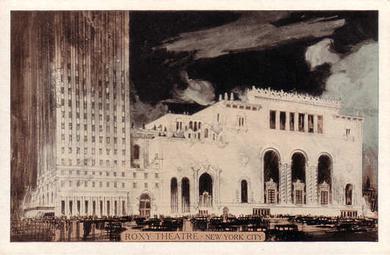
Roxy Theatre
1927–1960
Once billed as the “Cathedral of the Motion Picture” and, at 5,920 seats, the largest movie theater in the world. Demolished in 1960 for an office tower.

Where movie theaters have come and gone across New York City
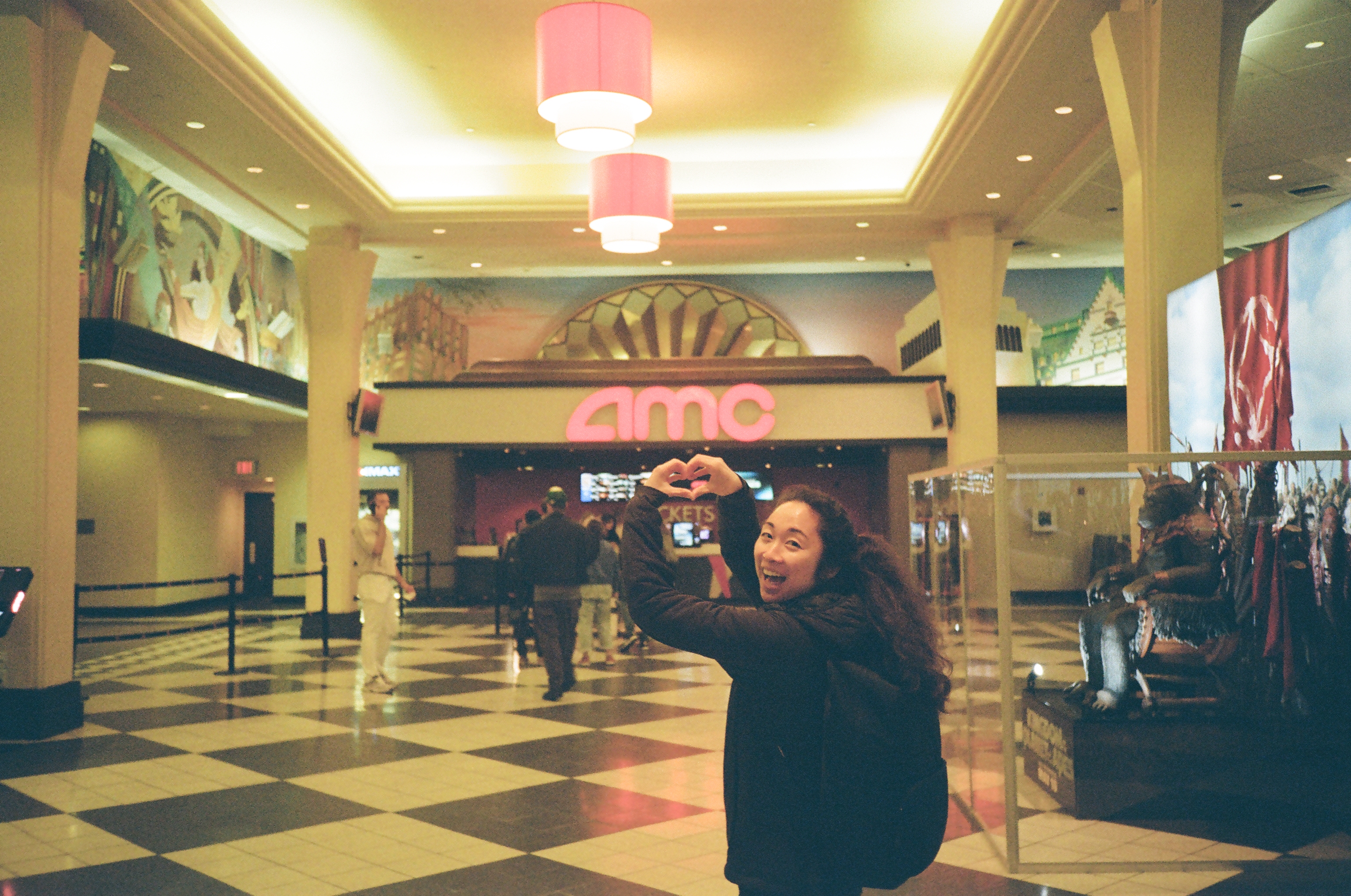
Film photo I shot, catching a film at AMC Kips Bay with my friend Michelle.
One of my favorite pastimes in NYC is to catch a film at the movie theater. When I had more free time a couple of years ago, I made it my mission to see as many movies as I could in as many different theaters across the city.
It was absolutely thrilling to be fully engrossed with the crowd, all laughing or crying at what was happening on the silver screen, often elevating the movie entirely. The guttural gasp everyone had when watching Saltburn is still seared in my mind.
As Nicole Kidman says, it’s “that indescribable feeling we get … and we go somewhere we’ve never been before … somehow reborn. Together.”
This past year has been incredible for movies, with a rise of ticket sales and movie goers, spurred by so many cultural factors including the popularity of Letterboxd, the star-studded movies and casts of this year (The Odyssey and Spiderman: Brand New Day alone have broken over $3B at the box office worldwide), and the cry for more shared spaces to hang out with friends in real life over online social media.
I recently got a chance to eat at Phoenix Palace, a new restaurant that took design inspiration from Music Palace, Chinatown’s last remaining movie theater, installing a ticketing booth out front. Music Palace closed in 2000, replaced by a chain hotel. I chatted with one of the hosts and co-owners of the space, and he mentioned coming to this theater a lot as a kid, a cultural institution, and he was sad to see it go.
AMC Kips Bay also announced that they would be closing at the end of 2026. For me, this theater was always a bit out of the way — I used to live on the UWS and now down in Fort Greene — but I could always count on grabbing a last minute spot there for films nearing the end of their run in the theaters. Community members are trying to rally and save the screens, and it will be sad to see it also go.
Both of these incidents inspired me to take a look at researching how many movie theaters there currently were in the city and how many closed over the years.
Operating Movie Theaters in NYC Over Time
The movie theaters counted here excludes those in which we are missing either the opening or closing dates.
There have been approximately 910 movie theaters that have operated across NYC since the start of commercial cinema. New York built movie theaters at an extraordinary pace, with construction peaking in the 1910s.
Near the peak of this time, around the 1940s, over 596 theaters were operating across the boroughs.
Nationally, moviegoing reached its postwar peak in 1946. An estimated 90 million Americans went to the movies each week,1 buying tickets that cost an average of just 42¢ — about $7 today.2 The industry took in nearly $1.7 billion at the box office that year, equivalent to roughly $29 billion today.3
It was a remarkable high point for American moviegoing: theaters were drawing tens of millions of people every week, and Hollywood was supplying them with hundreds of new films each year.
New York started losing more and more theaters over time — single-screen neighborhood houses typically closing first, then the ornate movie palaces, until finally most of the theaters able to survive were the larger multiplexes.
Here are some of the most famous theaters that have closed over the years.
1927–1960
Once billed as the “Cathedral of the Motion Picture” and, at 5,920 seats, the largest movie theater in the world. Demolished in 1960 for an office tower.

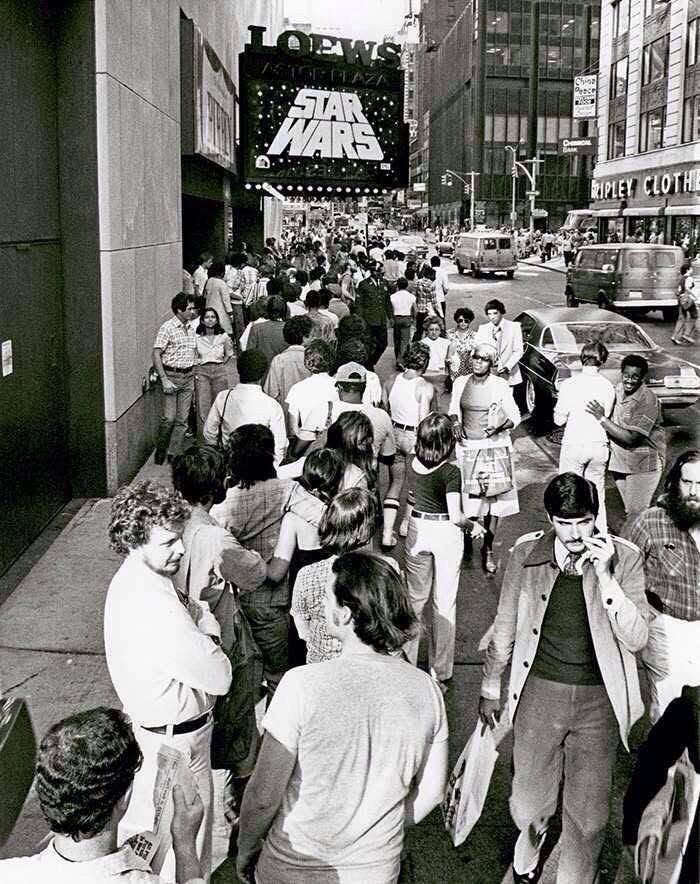
1921–2006
Marcus Loew's flagship Times Square house, later subdivided into a twin before finally closing.
1972–1997
A single-screen giant beneath the W.R. Grace Building on 44th Street. Closed as a cinema in the late 1990s and later gutted for a live-event venue (Nokia Theatre, then Playstation Theater).

1906–1972
A Times Square movie palace at Broadway and 45th Street, one of the district's earliest.

2001–2018
The building opened in 1916 as a Yiddish vaudeville house and later served as a church for decades before Landmark reopened it as a five-screen art-house cinema in 2001.

1981–2018
An Upper West Side arthouse mainstay for foreign and independent film for nearly four decades.
Most movie theaters had a good run, with many of them lasting between twenty to forty years.
One may consider the LeFrak theater at the American Museum of Natural History to be the oldest, as it’s been showing films in its auditorium for over 137 years, although it was originally built as a lecture hall back in 1889. The distinction of the city’s oldest surviving purpose-built movie theater still in operation belongs to Brooklyn’s Alpine Cinema, which opened as a 2,200-seat Loew’s theater in 1921 and has been showing movies for more than a century.
Distribution of theater lifespans in years.
This chart excludes theaters confirmed closed with no recorded closing year, and a handful with a same-year open/close (measured in whole years from the source data, so a theater that opened and closed within one calendar year shows near zero rather than a true zero).
For the theaters that closed, a majority of them were turned into amenity or shops, with most as regular buildings for residential or office use.
| Current building use | Count |
|---|---|
| Retail / commercial shop | 164 |
| Religious use | 92 |
| Mixed use | 51 |
| Food, drink, nightlife or events | 35 |
| Storage, industrial or automotive | 20 |
| Health or fitness | 18 |
| Education, childcare or community use | 17 |
| Office or professional services | 12 |
| Residential or hotel | 10 |
| Parking or other infrastructure | 1 |
| Total with documented alternative use | 420 |
Another 131 closed theaters don’t have a documented alternative use.
A movie theater is one of the great businesses that give people a reason to visit a neighborhood. A 2023 study commissioned by the British Film Institute found that 55% of moviegoers typically ate or drank somewhere else as part of a trip to the cinema, while 53% also went shopping, bringing some life to a local neighborhood.1
Nearly two-thirds of moviegoers surveyed also said their cinema contributed to their sense of pride in the area where they lived, with mainstay cinema hubs increasing that up to 70%.
Researchers estimated that these venues generated at least £600,000 in additional social value per cinema each year, beyond the money generated through tickets, concessions, memberships, and other sales.1
Other research also points to the same role for cinemas as community spaces. A study of local cinemas and multi-arts venues in Scotland found that 85% of respondents considered their cinema a focal point for the community, 95% described it as a safe and trusted place, and 81% considered it important for young people growing up in the area. More than half said attending made them feel less lonely or isolated.2
Now while these studies weren’t conducted in NYC, this helps to illustrate what can affect a local neighborhood when a movie theater goes away, losing a destination that can bring foot traffic to the street, customers to nearby businesses, and provide a natural place for residents to meet up.
As Sean Fennessey from The Ringer on The Big Picture once said, “I think people are desperately in search of community right now and of feeling closer to other people and sharing things and not feeling disconnected by technology.”
Where could NYC build a movie theater today?
NYC’s Department of City Planning tweeted out their ZoLa map given the news of AMC Kips Bay closing.
Using the ZoLa map, I plotted the existing locations of all the theaters on this map, labeled by whether a movie theater would be allowed to be there today, to show how zoning regulation has changed over time as well as where a new theater could be placed today.
Zoning districts are colored based on whether an ordinary movie theater could be there today. Feel free to read the Zoning Resolution for more details on § ZR 32-181, 32-183, 42-181.
Out of the theaters that continue to exist today, over 39 venues of them don’t actively show films anymore, with 81 of them actively showing movies.

1930–present
The last and largest of Loew's five “Wonder Theatres,” now a Washington Heights arts and event space.

1929–present
A Flatbush Avenue Wonder Theatre, dark for decades before a 2015 restoration brought it back as a concert and event venue.
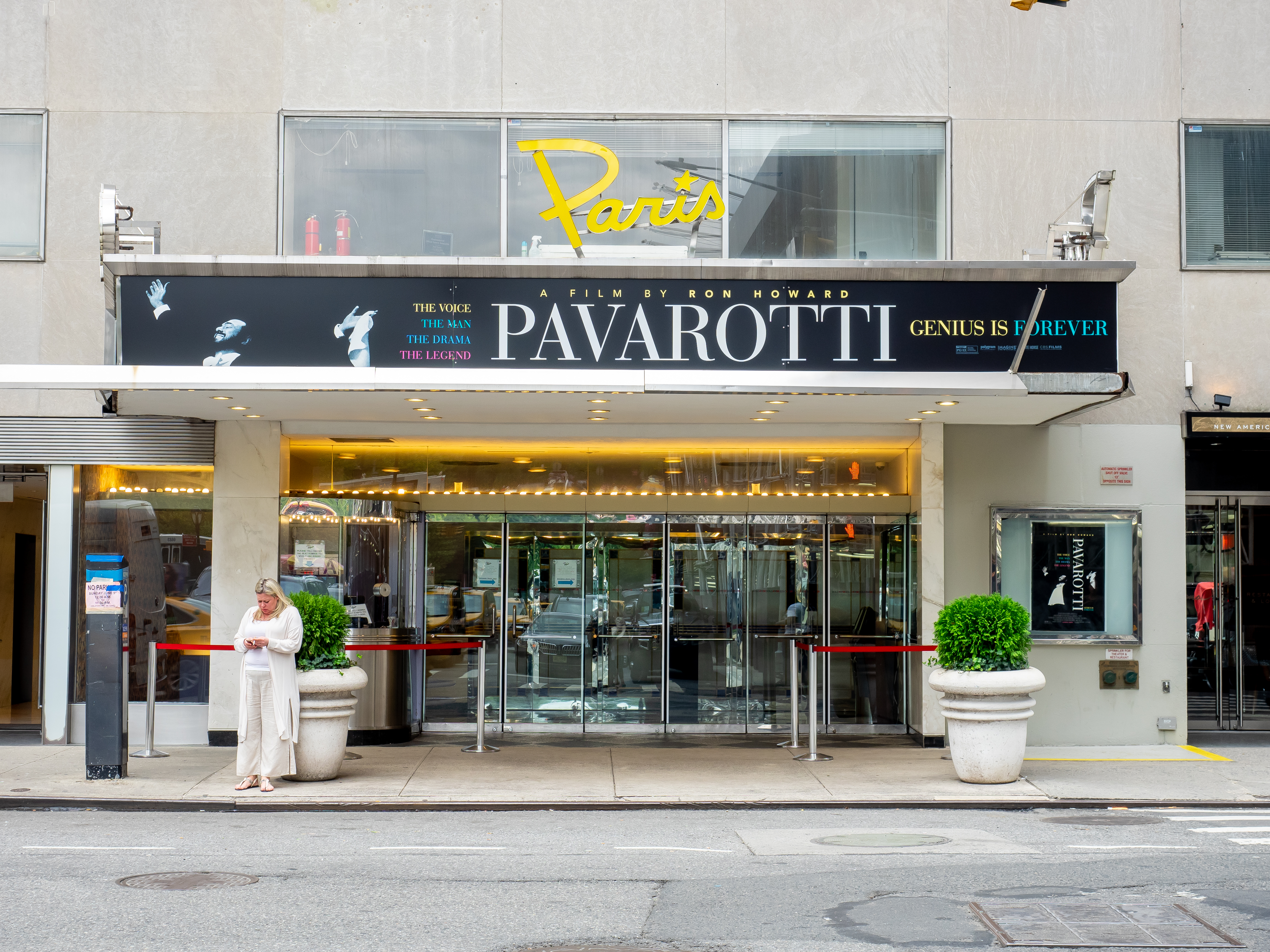
1948–present
A single-screen house behind the Plaza Hotel that closed in 2019 and was revived within weeks by Netflix.

1926–present
A former Yiddish Art Theatre on Second Avenue, now a multiplex under its original ornate ceiling.

1912–present
A former burlesque house on 42nd Street, moved and rebuilt as part of Times Square's 1990s redevelopment.

1900–present
The domed IMAX theater at the American Museum of Natural History.

1991–present
A Bronx multiplex that went dark and reopened again in 2025.

1998–present
The Brooklyn Academy of Music's own cinemas, showing first-run independent and repertory film.
AMC Kips Bay is announced to be closing at the end of this year 2026, with the property purchased by NYU Langone in 2025. Originally designed by David Rockwell, a Loews architect, this 15-screen, 3,000 seat megaplex opened up back on May 14, 1999 as the Loews Kips Bay Theatre, before AMC took over, also adding indie films to its lineup.
It will have run for over 27 years as one of the most popular movie venues to catch a flick in Manhattan. The last movie I personally caught there was half of the animated film, Flow, before being kicked out due to an electrical issue.
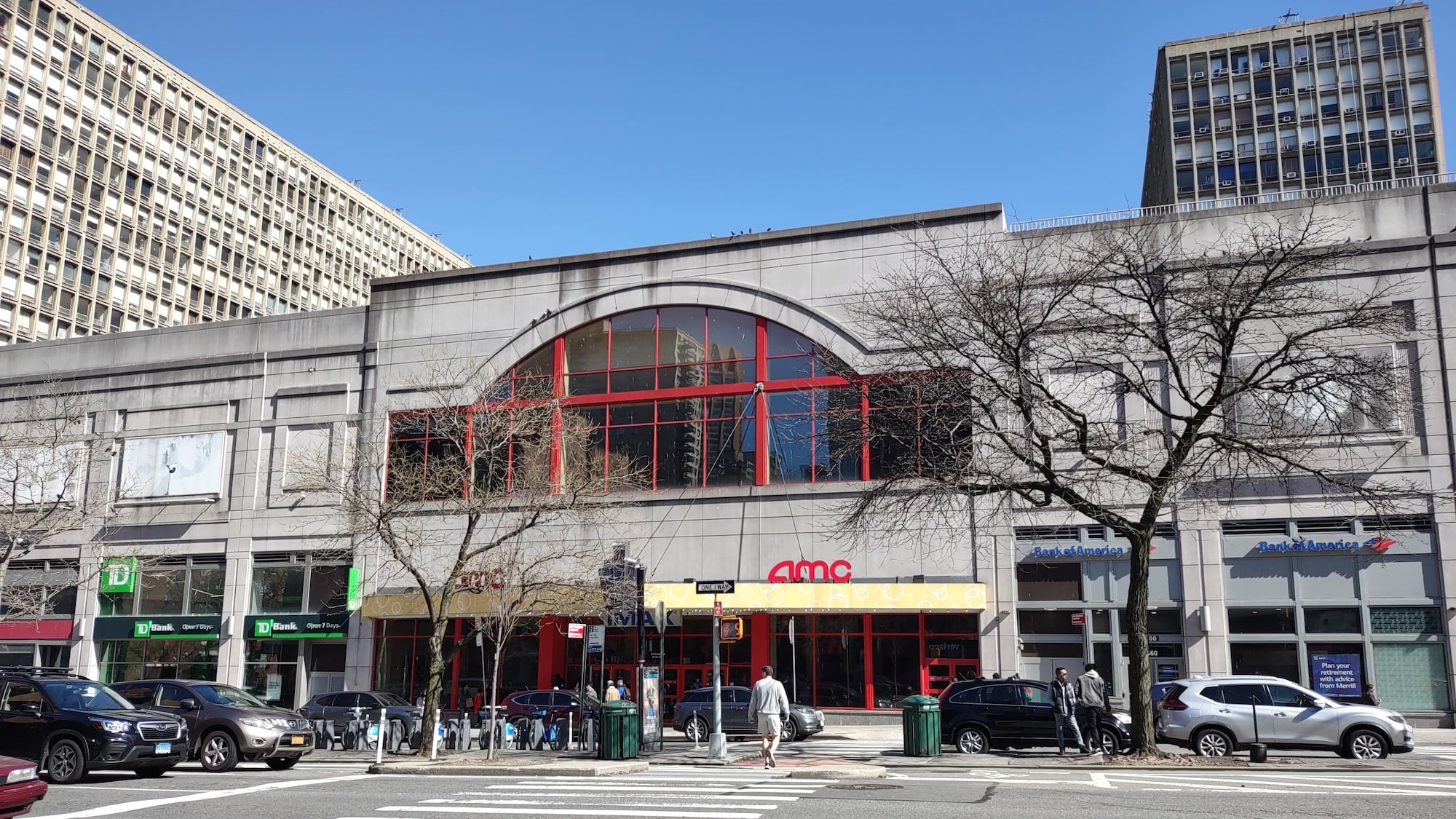
Photo by Jim.henderson on Wikimedia
RIP AMC Kips Bay.
New York won’t be adding hundreds more movie theaters anymore. But these spaces aren’t just to watch movies, but also neighborhood institutions, gathering places, and pieces of the city’s physical fabric.
So before the credits roll on another one, maybe it’s worth holding on to what we have left. See you at the movies.


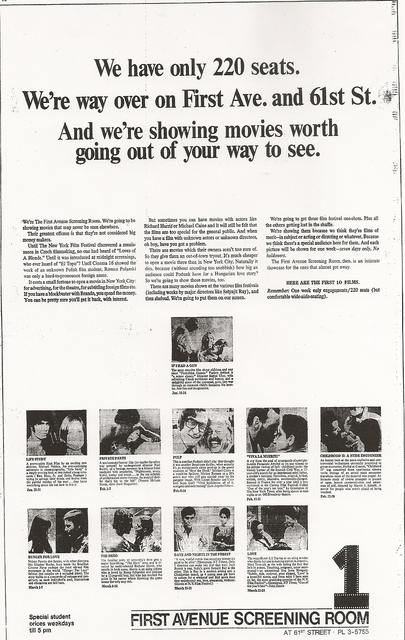


Major shoutout to Cinema Treasures for providing me with most of the data in this article. Feel free to check out what’s playing at each theater by exploring the map or checking out on Screen Slate.
If you’d like to keep up with other stories about city planning and spaces, subscribe to In Spaces or reach out to me @gibsontchu.